IU Agriculture // Earth’s Livestock
>> Farming on Earth
Reading time: 2min
Companions in Cultivation
As the Intergalactic Union deepens its understanding of Earth, one of the most fascinating aspects of human agriculture is the long-standing relationship between people and their domesticated animals. For thousands of years, humans have raised livestock not only for food, but also for labor, companionship, and cultural identity.
Most Common Species
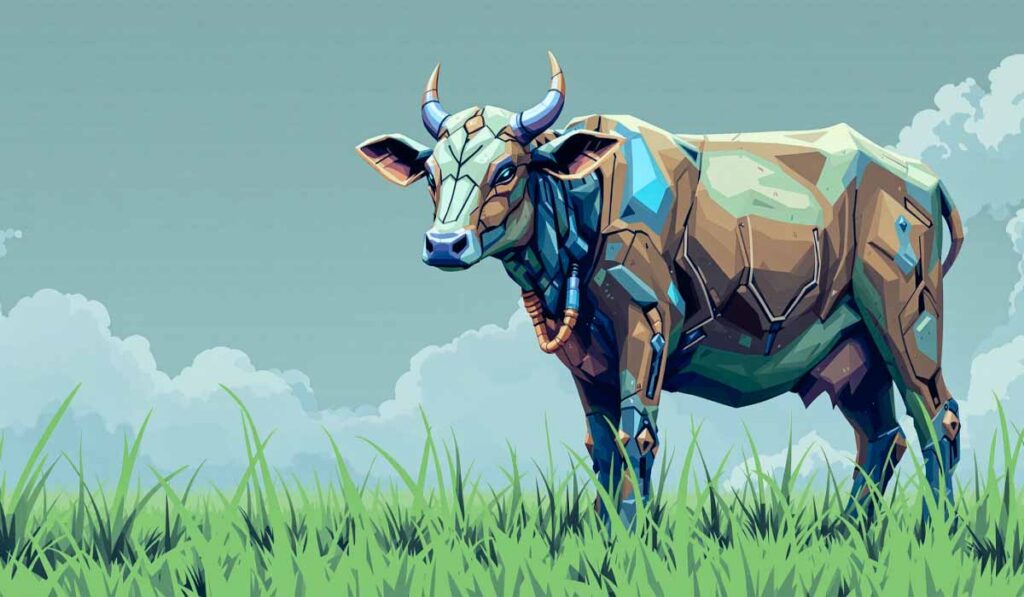
- Cattle: Among the most widespread livestock, cattle provide milk, meat, leather, and even labor in some rural regions. Their importance in human diets and economies has made them a cornerstone of agriculture worldwide.
- Sheep & Goats: Valued for their wool, milk, and meat, these hardy animals thrive in diverse climates, from mountains to grasslands. They are also tied to ancient human traditions, often appearing in festivals and rituals.
- Poultry: Chickens, ducks, and other birds are kept in vast numbers, prized for their eggs and meat. Their adaptability has made poultry one of the most reliable sources of protein for humans.
- Swine (Pigs): Known for their efficiency in converting feed into meat, pigs are common in many regions, though cultural customs sometimes dictate whether they are raised or consumed.
- Equines (Horses & Donkeys): While less central to food production today, horses and donkeys played a crucial role in transportation and labor for millennia. Even now, horses remain beloved for sport and companionship.
Cultural Dimension
Human livestock are more than resources — they are often entwined with culture and identity. From cattle-herding traditions to equestrian sports, these animals occupy symbolic roles in stories, rituals, and daily life. In many regions, livestock ownership is still seen as a marker of prosperity and responsibility.
Union Relevance
Agricultural councils have noted that Earth’s livestock may provide genetic templates for improving animal husbandry across colonies. Resilient species like goats and poultry, in particular, could prove valuable in supporting frontier settlements. At the same time, the Union emphasizes responsible adaptation, ensuring that Earth’s ecosystems — and cultural ties to these animals — are respected.
In studying Earth’s livestock, the Union gains insight into the unique ways humanity has shaped its survival. These animals are not merely food sources, but companions in cultivation — a living testament to cooperation between species.
By Fero Gelno, IU geverner for Agricultural Advances
Published Jun 16 3025, 11:45 S2T4